Why Video Podcasts and YouTube Matter in 2026: Distribution Data
The 2026 podcast statistics are clear: video is no longer a format experiment. It is the primary discovery mechanism for new audiences, and YouTube is the second-largest podcast platform after Spotify. If your show still treats video as an afterthought, or if you publish full episodes without cutting them down, you are losing reach every week. This article breaks down what the latest data means for your distribution strategy, then walks through exactly how to turn long-form episodes into short-form content that travels across YouTube, TikTok and Instagram.
The source data comes from Riverside's 2026 industry report, which consolidates listener behaviour, platform growth and demographic trends. The headline figure: video podcasts now account for more than half of all new podcast consumption among audiences under forty. That shift is not about preference alone. It reflects how discovery works now, where clips surface in feeds, shorts appear in search results, and vertical video pulls viewers into full episodes they would never have found through audio directories.
Why video podcasts dominate discovery in 2026
Podcast discovery has always been a problem. Apple Podcasts charts favour shows that already have momentum. Spotify's algorithm prioritises established creators. Word of mouth works, but it scales slowly. The traditional model assumed listeners would browse categories, read descriptions and subscribe based on a trailer. That model is dead.
Video changed the equation because it provides context before commitment. A thirty-second clip shows the guest, the tone and the topic without requiring a listener to invest twenty minutes blind. YouTube's recommendation engine surfaces those clips to people who watch similar content, even if they have never heard of your show. TikTok and Instagram do the same, but faster, because the format is native and the friction is lower.
The Riverside data shows that video podcasts generate three times more first-time listeners than audio-only shows, and those listeners convert to subscribers at a higher rate. The reason is simple: they have already seen proof the content is relevant before they hit follow. That proof comes from clips, not full episodes.
This matters for business podcasts especially, because your audience is not browsing podcast apps for fun. They are on LinkedIn during a commute, on YouTube while researching a topic, or on Instagram between meetings. If your content does not meet them there, in a format that works on that platform, you do not exist.
How to structure your podcast for short-form distribution
Turning a sixty-minute conversation into clips that work on social platforms requires planning before you record, not just editing after. The structure of your episode determines whether it produces usable content or whether your editor spends hours searching for moments that barely make sense out of context.
Start by designing episodes around discrete ideas. Each segment should answer one question, solve one problem or tell one story. Avoid sprawling conversations that meander across topics without clear breaks. A well-structured episode has natural cut points every eight to twelve minutes, where a standalone clip begins and ends without requiring the viewer to have heard what came before.
During recording, signal those breaks verbally. Restate the topic when you move to a new section. Summarise the point before you move on. This gives your editor clean in-points and out-points, and it gives the audience context when they see the clip in isolation. The same technique works for YouTube chapters, which help viewers navigate long episodes and give the algorithm clear signals about what each section covers.
Your guest plays a role here too. Brief them before recording to keep answers concise and visual. A three-minute explanation with a clear example will generate better clips than a ten-minute monologue that circles the point. Ask follow-up questions that force specificity: exact numbers, real names, concrete steps. Vague advice does not clip well.
Recording for vertical video and YouTube shorts
Vertical video is not just horizontal video cropped. The framing is tighter, the pacing is faster, and the first three seconds matter more than anything else. If you plan to distribute on TikTok, Instagram Reels or YouTube Shorts, you need to record with that format in mind.
That means positioning your subject closer to the camera and keeping the background simple. Wide shots with multiple people in frame do not work when cropped to nine-by-sixteen. Close-ups do. If you use two cameras, one should be set for vertical specifically, so your editor has native footage rather than having to punch in and lose resolution.
Audio quality becomes even more critical in short-form video, because viewers will scroll past anything that sounds unclear in the first second. A slight echo or low microphone level that might be acceptable in a full episode will kill a clip instantly. This is where recording in a controlled environment makes the difference. A professional podcast studio in London eliminates the variables that ruin short-form content: room noise, inconsistent levels, background hum.
What makes a clip travel across platforms
Not every moment from your episode will work as a clip. The segments that travel share specific characteristics: they start with tension or a surprising statement, they resolve quickly, and they leave the viewer wanting more context. A clip is a trailer for the full episode, not a summary of it.
The most effective clips follow a simple structure. Open with the hook: a bold claim, a question, a contrarian take. Spend the middle thirty to sixty seconds unpacking that hook with one clear example or piece of evidence. Close with a partial resolution that raises a new question, which the full episode answers. The viewer should feel informed but incomplete, which drives them to the long-form content.
Platform-specific context matters. A clip that works on LinkedIn will not work on TikTok, even if the underlying content is identical. LinkedIn audiences tolerate longer setups and more formal language. TikTok audiences expect immediacy and a conversational tone. Instagram sits between the two, but skews visual: if the clip relies entirely on what is being said rather than what is being shown, it will underperform.
Captions are not optional. More than sixty percent of social video is watched without sound, according to multiple platform studies. If your clip does not have accurate captions burned in, or at least auto-generated and checked, you lose the majority of potential viewers. The same data shows that clipped content with visible captions generates higher completion rates even when sound is on, because viewers can follow along while multitasking.
The practical workflow: episode to clips in five steps
Here is the process our team uses to turn a single podcast episode into a full distribution package for YouTube, TikTok, Instagram and LinkedIn. This is not theory. It is the same workflow we follow for every session recorded at THE LODGE Studios.
- Record the full episode with two camera angles: one wide for YouTube landscape, one tight for vertical cropping. Use separate audio channels for each speaker, so levels can be balanced independently in post.
- Edit the long-form episode first, including chapters and timestamps. This gives you the master cut, and the chapter breaks become your clip shortlist.
- Pull five to eight clips based on chapter divisions, guest highlights and moments where the conversation turns visual or specific. Aim for thirty to ninety seconds each.
- Version each clip for platform: sixteen-by-nine for YouTube and LinkedIn, nine-by-sixteen for TikTok, Instagram Reels and YouTube Shorts. Add captions, lower thirds and any branding elements that fit the platform's style.
- Schedule clips to publish throughout the week after the full episode drops. Use the clips to drive traffic back to the long-form version on YouTube or your website.
This workflow assumes you have clean source material. If your recording has inconsistent framing, fluctuating audio or poor lighting, every step becomes harder and the output quality suffers. That is the hidden cost of DIY setups: the time and frustration spent fixing technical problems that should not exist in the first place.
What the 2026 data tells us about where this is heading
The Riverside report includes several forward indicators worth noting. First, YouTube is growing faster as a podcast platform than any audio-only app, and the gap is widening. Listeners under thirty-five now discover more new podcasts on YouTube than on Spotify, Apple or anywhere else combined. That trend will not reverse.
Second, short-form video is becoming the default discovery format even for long-form content. Viewers watch a Reel, then click through to a sixty-minute episode on YouTube. They see a TikTok, then subscribe to the audio feed. The short-form piece is not competing with the long-form piece; it is the gateway to it.
Third, platform algorithms increasingly reward consistency over virality. A show that publishes three clips a week will outperform a show that posts one clip that happens to perform well, because the algorithm learns the audience profile faster and serves the content more reliably. Distribution is now a volume game, which means production systems matter more than ever.
For business owners and consultants, this changes the return on investment calculation for podcasting. A show that produces only audio and publishes only full episodes is a single-use asset. A show that produces video, generates clips and distributes strategically is a content engine that feeds multiple channels for months. The same sixty-minute recording becomes a YouTube upload, five social clips, a blog post, a newsletter segment and a LinkedIn carousel. That is not repurposing. That is production design.
Recording quality and infrastructure: why it compounds
Every point in this article assumes you have source material worth clipping. If the conversation lacks energy, if the framing is static, if the audio is muddy, no amount of editing will fix it. Short-form content exposes production flaws instantly because the viewer has no patience and no commitment. A three-second scroll decision is unforgiving.
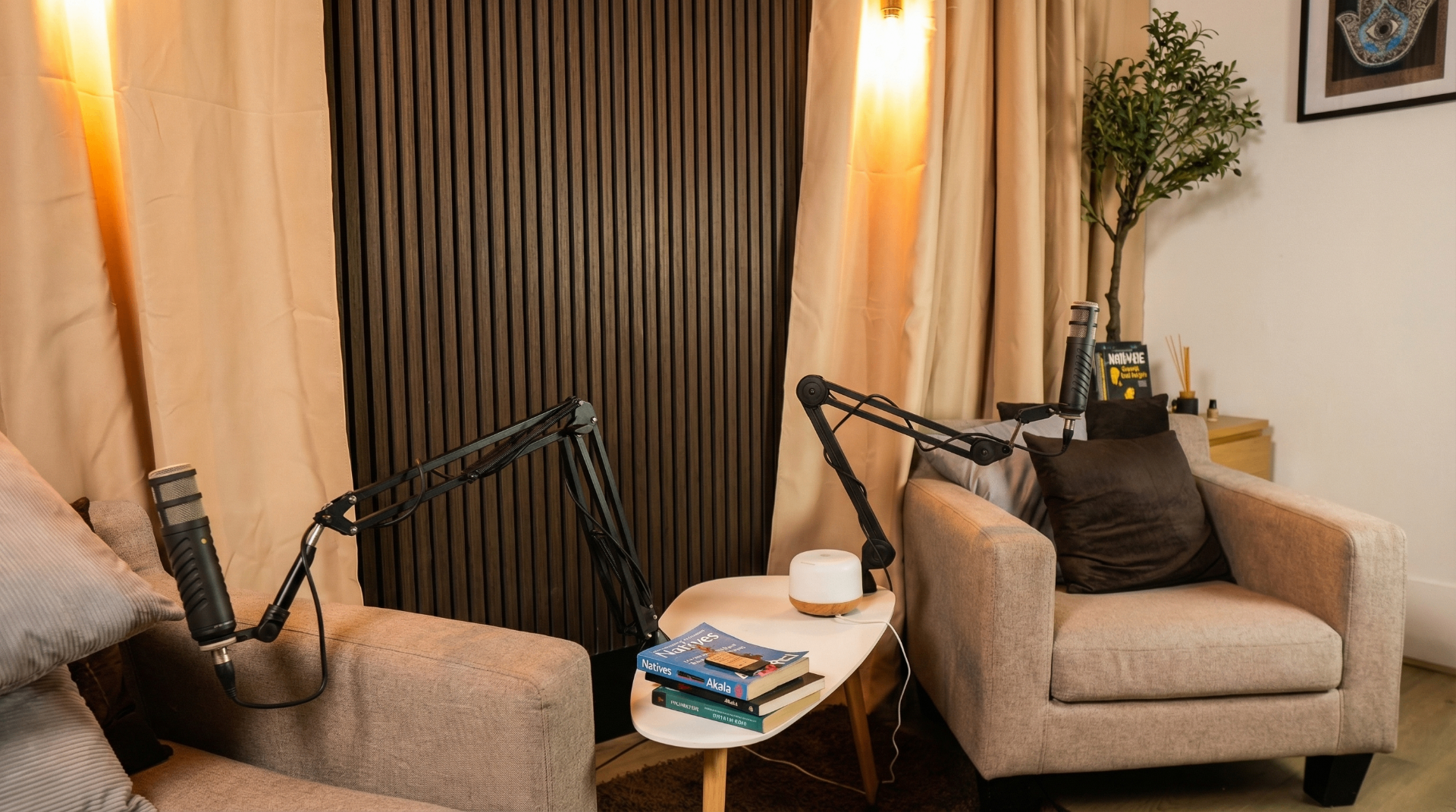
This is where recording environment matters. A professional podcast studio in London provides consistent lighting, broadcast-quality microphones and camera setups designed for both landscape and vertical video. The difference is not subtle. It is the difference between content that looks like a polished brand asset and content that looks like a Zoom call screen recording.
The LODGE Studios builds every session around multi-format output. We capture video and audio separately, we frame for both YouTube and social, and we deliver files ready for your editor or our post-production team to turn into clips without compromise. If your strategy relies on short-form distribution, the production setup cannot be an afterthought. It has to be the foundation.
If you are running a podcast now, or if you are considering starting one, the 2026 data makes the path clear. Video is the format. YouTube is the platform. Clips are the distribution model. The question is whether your production process is built to support that reality, or whether you are still recording as if discovery happens through RSS feeds and podcast apps.
Book a session at THE LODGE Studios and we will walk you through exactly how to record, structure and distribute a show that works across every platform that matters. No guesswork, no retrofitting, just a production system designed for how podcasting actually works now. Visit https://book.thelodgestudios.co.uk to get started.

