Why CEO Video Podcasts Build Trust Faster Than Written Content
Business owners now face a credibility problem that written content alone cannot solve. Your prospect has read a thousand LinkedIn posts this month. They have scrolled past countless blog articles promising transformation. What they have not done is heard you speak for thirty uninterrupted minutes about a problem you both understand, alongside someone whose opinion they already trust. That asymmetry explains why CEO video formats and video podcasting for business have moved from experimental to essential in under three years.
The shift is structural, not stylistic. A written case study tells the reader what happened. A recorded conversation with the person who made it happen, captured on video and published as a podcast episode, allows the viewer to form their own judgement about competence, clarity and whether this is someone they want to work with. The format creates trust at a speed no brochure can match, and the distribution model ensures the content works long after the recording ends.
This article examines which CEO video podcast formats produce measurable business outcomes, why podcast authority building outperforms static content in competitive markets, and what recording quality actually means when your objective is revenue rather than vanity metrics.
The credibility gap written content cannot close
Most professional service providers operate in markets where credentials are table stakes. Your competitors attended the same conferences. They hold similar qualifications. Their websites promise the same outcomes. Differentiation through a capabilities deck has become nearly impossible, and buyers respond by requesting references, case studies and proof points before any commercial conversation begins.
Video podcasting for business solves this in a way whitepapers and blog posts cannot. When a prospect watches you conduct a forty-minute conversation with a client, a peer or an industry figure they recognise, they absorb far more than your stated expertise. They assess how you listen, how you frame a problem, whether you interrupt, how you respond when challenged. These are the signals that determine whether someone books a call, and they are impossible to fabricate in written form.
The format also creates a perception of generosity. A business owner who publishes weekly conversations with interesting people is seen as someone who connects, convenes and adds value beyond their own service offering. That perception matters significantly more than most founders realise, because buyers in complex markets increasingly select advisors based on who else is in their network, not just what they claim to know.
CEO content strategy built around regular video podcast episodes also compounds in a way campaign-based marketing does not. Each episode becomes a permanent reference point. A conversation recorded eighteen months ago continues to attract viewers, generate inbound enquiries and demonstrate authority long after publication. The asset appreciates rather than decays, provided the recording quality and subject matter remain relevant.
Which CEO video podcast formats produce commercial outcomes
Not every video format translates into podcast lead generation or meaningful business development. The styles that work share three characteristics: they feature genuine conversation rather than scripted monologue, they address a problem the target audience currently faces, and they showcase the host's ability to facilitate insight rather than dominate the discussion.
The following formats have proven effective across consulting, coaching and B2B service businesses, and each can be recorded as a standalone video or as part of an ongoing podcast series.
- Client debrief episodes: Record a structured conversation with a client about a project you completed together. Walk through the brief, the obstacles, the decisions made and the outcome. This format demonstrates capability without self-promotion, because the client does most of the talking. It also serves as a reference that future prospects can watch before requesting their own case study.
- Peer strategy sessions: Invite another business owner, ideally someone who serves the same audience but offers a complementary service, and discuss a shared challenge your clients face. The format positions both participants as collaborative rather than competitive, and it gives the viewer access to two perspectives instead of one. These episodes often generate referrals in both directions.
- Industry analysis with a subject expert: Bring in someone with deep domain knowledge on a topic your audience cares about but that sits adjacent to your core service. For example, a leadership coach might interview an organisational psychologist about team dynamics. The format builds thought leadership video credibility through association and provides the guest with distribution they value.
- Quarterly market updates: Record a short episode at the end of each quarter summarising what you are seeing in your market, what has changed and what you expect next. These episodes require no guest, minimal preparation and create a reliable content rhythm that keeps your audience engaged between longer interview episodes.
- Founder story deep dives: Interview founders about the inflection points in building their business. These episodes appeal broadly, travel well on social platforms and allow the host to demonstrate empathy and insight without positioning themselves as the expert. The format also attracts guests easily, because most founders value the chance to tell their story properly.
Each of these formats works because it prioritises the viewer's interest over the host's ego. The objective is never to prove how much you know. The objective is to create a piece of content someone watches for thirty minutes, finishes, and immediately thinks of a reason to get in touch.
Why podcast authority building outperforms static content campaigns
A static content campaign has a defined lifespan. You publish a report, promote it for six weeks, collect a few hundred downloads and move on to the next asset. The effort required to produce the asset bears no relationship to how long it delivers value, and most campaign content generates enquiries only while it remains actively promoted.
Podcast authority building operates differently. Every episode you publish increases the total volume of content associated with your name and your business. Search algorithms favour video content, and platforms like YouTube function as search engines in their own right. A well-titled episode addressing a specific pain point will surface in search results for years, often ranking higher than written content on the same topic because video engagement signals are stronger.
The format also solves a problem most consultants and business owners struggle with: staying visible without appearing desperate. Weekly or fortnightly podcast episodes create a natural rhythm of contact. Your audience hears from you regularly, but the contact is substantive rather than promotional. You are not asking for anything. You are publishing a conversation they might find useful. That distinction changes how the content is received and whether it builds goodwill or generates fatigue.
Business podcast ROI becomes measurable when episodes are structured to serve a strategic purpose. An episode featuring a senior figure from a target account creates a reason to stay in touch with that organisation. An episode addressing a challenge common in a specific sector positions you as the obvious choice when someone in that sector needs help. The content does the outbound work without feeling like outbound activity, and the recording itself often functions as the most valuable interaction, not just a marketing output.
Consider a fractional CFO who records quarterly conversations with the finance directors of mid-sized technology companies. Each episode attracts other finance leaders in similar businesses. Each guest becomes a referral source. The library of episodes demonstrates sector expertise in a way no credentials section ever could. The podcast operates as both a lead generation engine and a relationship maintenance system, and the marginal cost of each additional episode falls as the production process matures.
What happens when the recording quality does not match the content quality
The strategic value of CEO video podcasts collapses entirely if the production quality signals amateurism. A viewer assessing whether to hire you forms an opinion within seconds, and poor audio, inconsistent lighting or a distracting background will override even the most insightful conversation. This is not about perfectionism. It is about ensuring the delivery mechanism does not undermine the message.
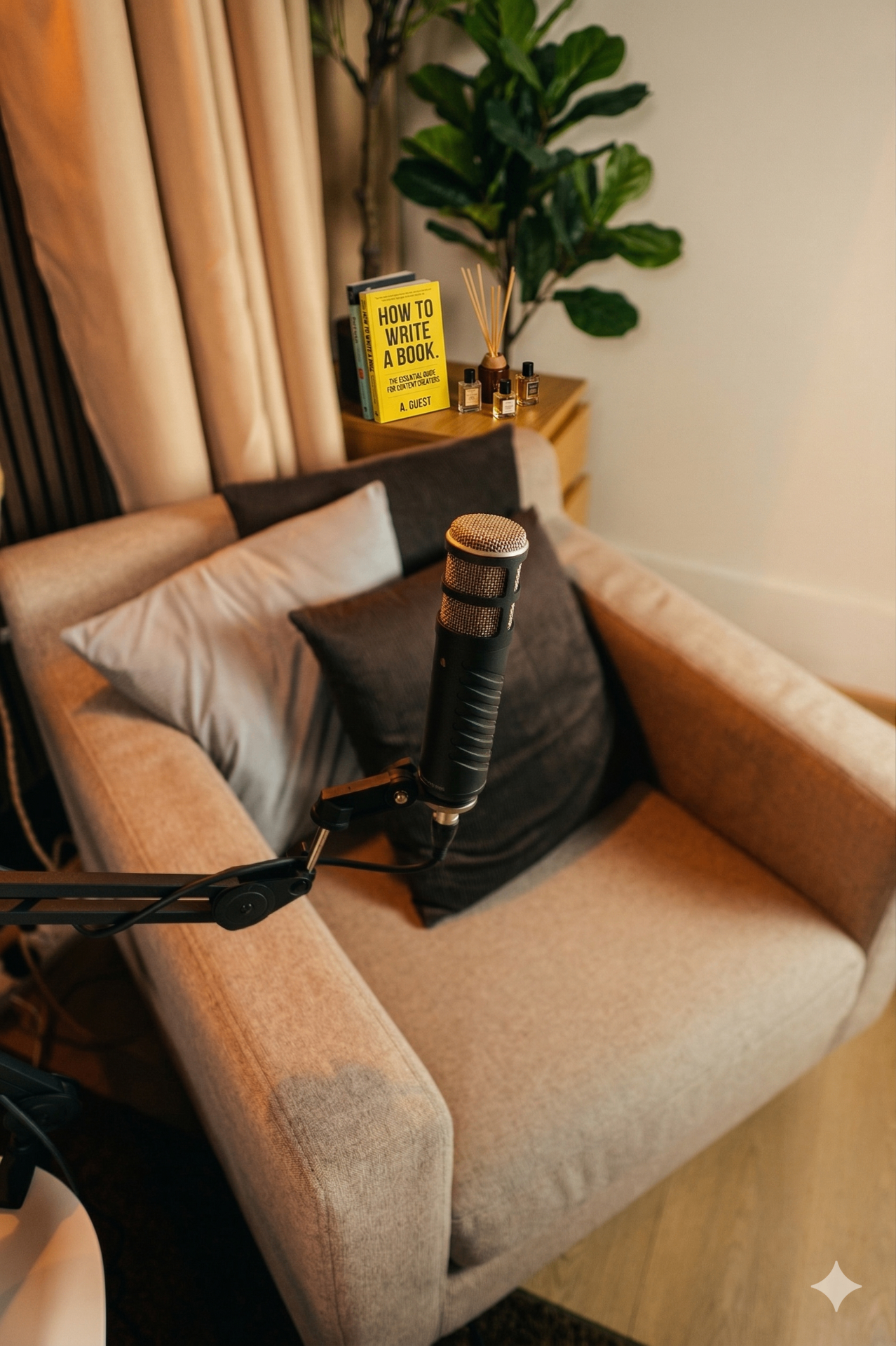
Most business owners underestimate how much recording environment affects perceived authority. A conversation recorded in a proper podcast studio London location with controlled acoustics, professional lighting and multi-camera angles looks and sounds like broadcast content. The same conversation recorded on a laptop webcam in a home office looks like someone who has not yet committed to the medium. Both versions contain identical insight, but only one creates the impression of a business that takes itself seriously.
The difference matters most when the content is shared. A prospect who receives a video podcast link from a mutual connection will watch thirty seconds before deciding whether to continue. If the first thirty seconds involve struggling to hear the speaker over background noise or squinting at an underlit face, they close the tab regardless of what comes next. The opportunity cost of poor production is every viewer who never makes it to the valuable part of the conversation.
This does not mean recording at home is impossible, but it does mean accepting that DIY production carries a ceiling. Equipment helps, but environment matters more. A quiet room with carpet, soft furnishings and controlled natural light will always produce better results than an expensive microphone in a glass-walled office with hard surfaces. The physics of sound and light do not negotiate, and most business owners lack both the time and the inclination to master those variables themselves.
Why this model works for time-pressed owners who avoid most marketing
The most common objection to starting a podcast is time. Business owners imagine hours of editing, constant content creation and a treadmill of weekly obligations they cannot sustain. That perception reflects how written content works, not how conversational content works. A forty-minute recorded discussion with a guest requires no scripting, no post-production beyond basic editing, and no follow-up content creation if the recording itself is strong enough to stand alone.
The format also aligns with how most senior people prefer to communicate. A founder who struggles to write a blog post can speak fluently for an hour on their area of expertise. The skill required is conversation, not composition, and the recording session often feels less like content creation and more like the kind of meeting they already conduct regularly. The difference is that this meeting gets published, distributed and continues to work long after it ends.
Frequency matters less than consistency. A monthly podcast with strong guests and clear themes will outperform a weekly series that feels obligatory and rushed. The audience cares about quality and relevance, not whether you published on the same day as last week. The format rewards commitment but does not require heroic effort, provided the production process is efficient and the guest pipeline remains active.
CEO video podcasts also solve the networking problem every business owner faces: how to maintain relationships with people you want to stay connected to but have no immediate reason to contact. Inviting someone onto your podcast creates a legitimate reason to reach out, a valuable hour of their time and a piece of content they will share with their own audience. The format turns relationship maintenance into content production, and the value flows in both directions.
What to do if you want the commercial impact without the production headache
The strategic case for video podcasting for business is clear, but most owners lack the infrastructure to produce it consistently. Buying equipment solves part of the problem. Learning how to use it, maintaining it, troubleshooting technical failures during important recordings and managing the post-production workflow solves none of them. The smarter approach is to treat recording as you would any other professional service: delegate it to people who do it every day.
A proper recording session in a dedicated space removes every variable that degrades home recordings. The acoustics are controlled. The lighting is consistent. The cameras are positioned, focused and monitored by someone whose only job is ensuring the technical output matches the content quality. The business owner turns up, conducts the conversation and leaves with files ready to publish. No troubleshooting. No second takes because the microphone was muted. No apologies to the guest about background noise or technical delays.
We see this consistently at THE LODGE Studios. A client books a session, arrives with their guest, records a conversation and walks out knowing the content will represent their business properly. The session becomes repeatable, scalable and something they can commit to long-term because the friction has been removed. The recording quality stops being a concern and starts being an asset, and the focus returns to where it belongs: the conversation itself and the relationships it builds.
If you are considering whether video podcasting makes sense for your business, the question is not whether you have time to learn production. The question is whether regular, high-quality conversations with the right people would create commercial opportunities you are not currently generating. If the answer is yes, the production problem is already solved. Book a session at THE LODGE Studios in London, bring someone worth talking to and record the kind of content that makes your expertise visible, your network valuable and your business easier to buy from. You can reserve a session at https://book.thelodgestudios.co.uk.

